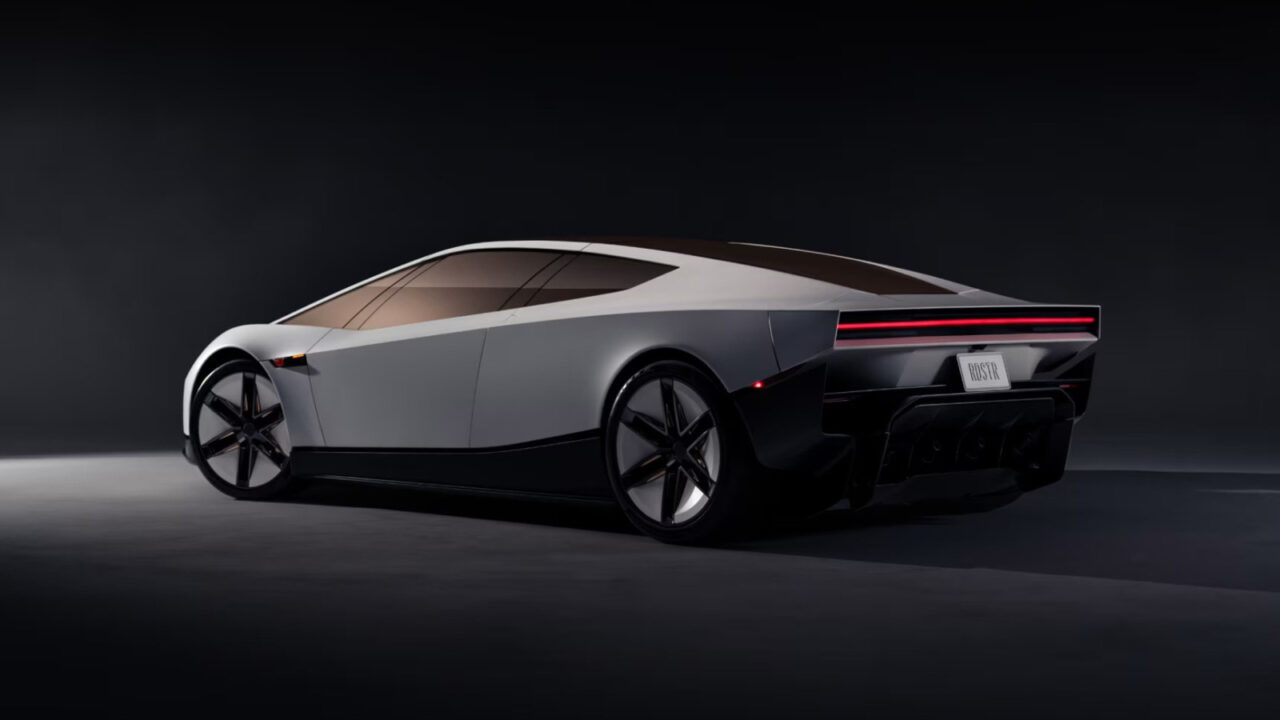
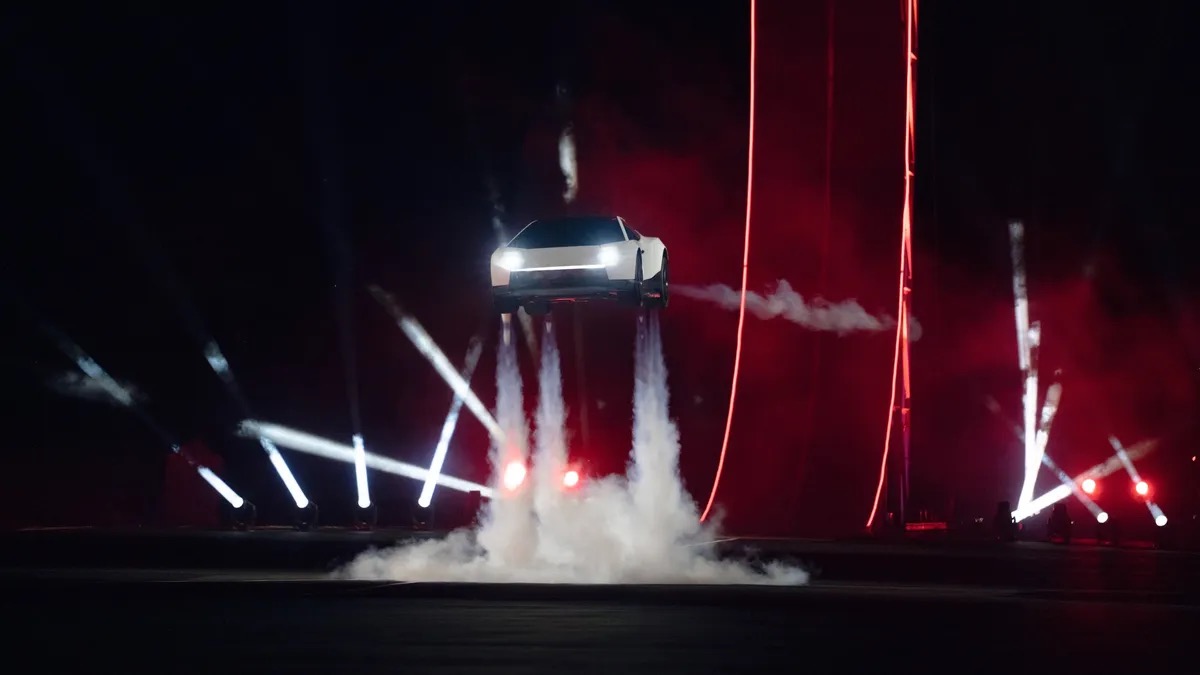
Tesla presented its redesigned, second-generation Roadster on Thursday, October 15, nine years after it first showed the concept, and the presentation leaned heavily into spectacle. At a SpaceX test site in McGregor, Texas, Elon Musk and the Tesla team showed the car driving up a C-shaped ramp, sticking upside-down at the top, then launching off the ramp, flipping in midair, and using a thruster system to glide safely back to the ground. It’s a dramatic way to reintroduce a car that was first previewed back in 2017, but buyers who want the full package will need to pay well beyond the sticker price just to get in line.
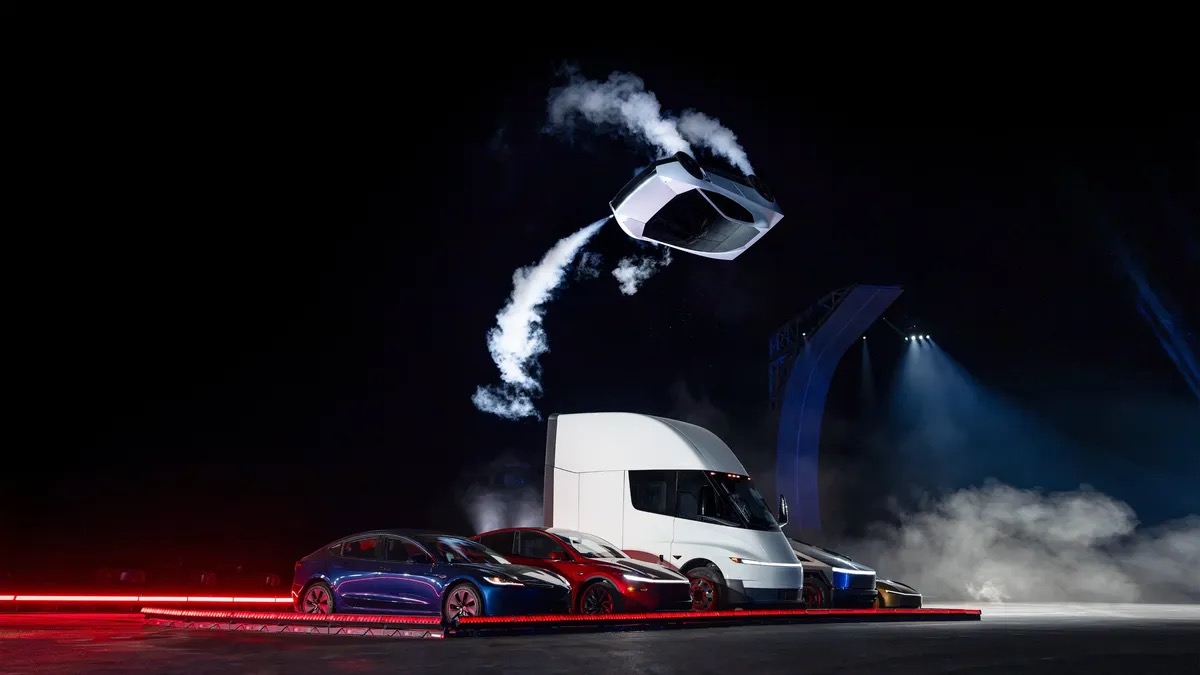
During the show the car also used its thrusters to hop over a Cybercab, a Cybertruck, a Tesla Semi, a Model Y and a Model 3, and Tesla showed it reaching 60 mph in about one second. Musk called it “the best of the last of the human-driven cars.”
How the stunt actually worked
The upside-down hang wasn’t magic or a hidden cable rig. Tesla says the Roadster uses a multi-mode fan and ground-sealing system that pulls air out from underneath the car, creating enough downforce-style suction to hold it in place against the ramp even while stationary. It’s essentially an extreme version of active aero, borrowed conceptually from systems used in some track-focused performance cars but scaled up for a full stunt demonstration.
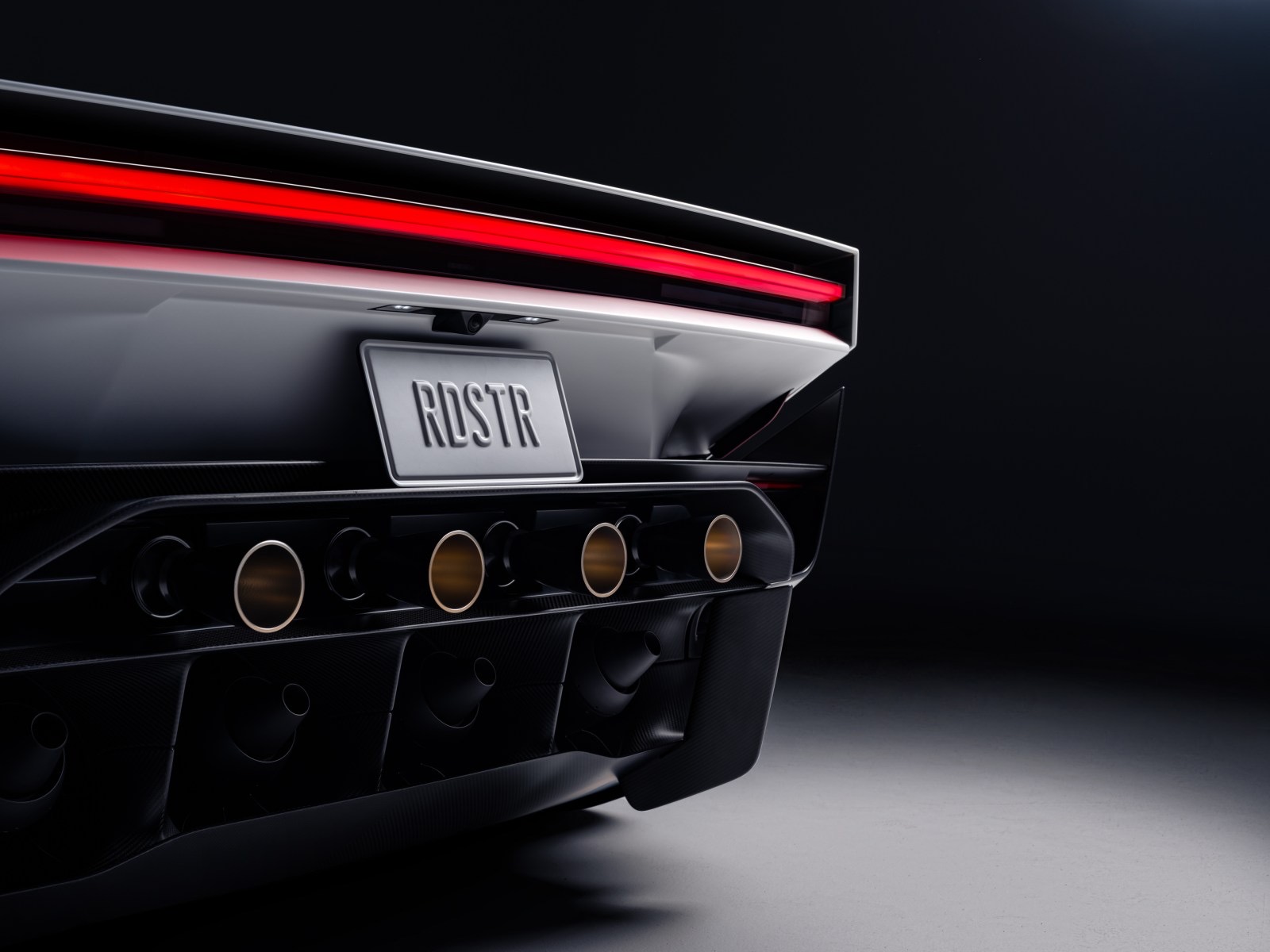
The jump-and-land portion relied on a separate system: attitude-control thrusters paired with rear thrusters that Tesla describes as cold-gas thrusters using all-electric actuators. Cold-gas thruster technology is more commonly associated with spacecraft, where precise, rapid bursts of propellant are used to adjust orientation without combustion. Tesla’s version is built to make what it calls “micro adjustments within a fraction of a second,” which is what allowed the car to right itself mid-flip and touch down under control. An Optimus robot sat in the driver’s seat during the demonstration, but Tesla confirmed the whole routine was pre-programmed rather than something the robot itself was piloting.
What you actually get, and what it costs
Strip away the theatrics and the purchasing structure is fairly conventional Tesla pricing-tier logic, just with eye-watering numbers at the top end. A reservation for the base Roadster costs $5,000 upfront, followed by a $45,000 payment due within 10 days. That’s the entry point for a car without any of the exotic hardware shown on stage.
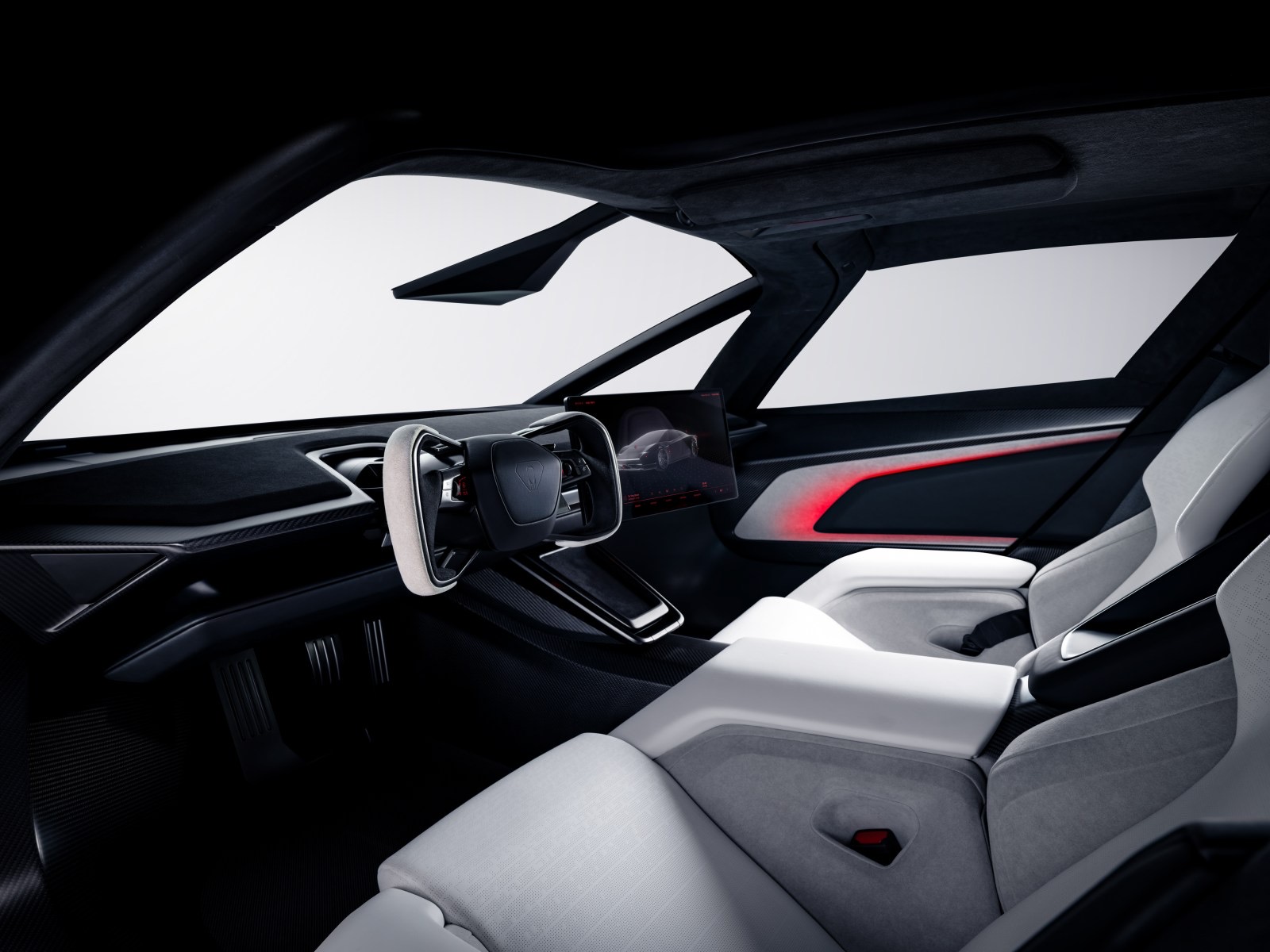
Buyers who want the suction system and acceleration thrusters need the “Thrust” package, which adds another $245,000 due within 10 days of reserving. All told, that’s $250,000 committed in a short window before the car even exists in showrooms. Above that sits the “Rocket” version, which includes the full flight-style system demonstrated at the event. Tesla hasn’t published pricing for Rocket because it’s invite-only, suggesting it will be reserved for a very small number of buyers, likely including the influencers and media figures who’ll be first to show it off publicly.
Why the timeline matters
Musk said the redesigned Roadster will enter production in 2028, which means anyone paying today is funding a car that’s still two years from reaching customers. Given the Roadster’s history of slipping launch dates since its original 2017 reveal, that timeline should be treated as a target rather than a guarantee. Tesla says all three trims will have 300 miles of range and top speeds above 230 mph. The base Performance trim seats two and uses the suction system, Thrust adds rear cold-gas thrusters for 0-60 mph in under a second, and the one-seat Rocket has 10 thrusters fed by 600 liters of compressed air. Those are Tesla’s own figures; none of them has been independently tested.
Who this is actually for
Realistically, the Thrust and Rocket tiers aren’t aimed at typical EV shoppers weighing a Roadster against other performance cars. They’re aimed at a small pool of buyers who want the most extreme, headline-grabbing version of the car regardless of cost, similar to how some automakers reserve ultra-limited trims for collectors. The base reservation, by contrast, is accessible to a much wider audience and functions more like a deposit to hold a place in line rather than a final commitment, since full payment and delivery are still years away.
The bottom line
Tesla’s new Roadster reveal was built to generate buzz, and the suction-hang-and-thruster-flip demo accomplished that. But the practical takeaway for prospective buyers is simpler: a basic reservation is a relatively modest $50,000 total commitment, while the thruster-equipped version demands a quarter-million dollars before production has even started in 2028. Anyone interested should treat the stunt footage as a proof of concept rather than a preview of guaranteed real-world specs, and watch for Tesla to share actual range, performance, and pricing details as the production timeline gets closer.
Sources: Engadget, TechCrunch