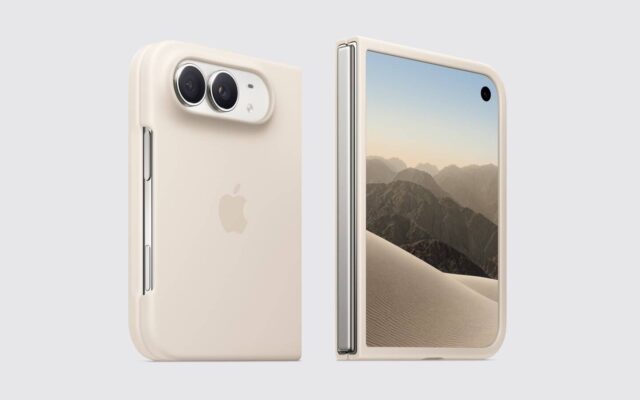
The foldable smartphone market has been around for years, dominated by brands like Samsung and rising competitors such as Oppo. But one major player has been noticeably absent—until now.
According to multiple leaks and industry insiders, Apple is preparing to launch its first foldable device, commonly referred to as the iPhone Fold.
And if the rumors are accurate, Apple isn’t just entering the foldable market—it’s trying to fix it.

iPhone Fold Design: Apple’s Different Approach
Unlike most foldable devices that follow the “book-style” design popularized by Samsung, Apple is reportedly working on a more compact and practical form factor.

Expected Display Sizes
- 5.28-inch outer display
- 7.58-inch inner display (unfolded)
This puts the iPhone Fold closer to a hybrid between a smartphone and a mini-tablet, but without the bulk that many users complain about in current foldables.
👉 The key idea here: Apple is prioritizing usability over novelty.
Where other brands focused on “wow factor,” Apple seems to be focused on making foldables actually usable in daily life.

The Biggest Innovation: Eliminating the Crease
Let’s be honest—every current foldable has one major flaw: the crease.

You see it. You feel it. And once you notice it, you can’t ignore it.
Apple’s rumored solution includes:
- A titanium hinge
- Advanced liquid metal materials
- A redesigned folding mechanism
Why This Matters
If Apple successfully minimizes or eliminates the crease:
- It improves visual immersion
- It enhances touch interaction
- It increases long-term durability
This isn’t just a small upgrade—it’s potentially the main reason Apple waited so long to enter the foldable market.
A Radical Redesign: No Dynamic Island, No Face ID?
One of the most surprising rumors is that Apple may completely rethink the front-facing experience.
Expected Changes:
- Under-display selfie camera
- Removal of the Dynamic Island
- Possible removal of Face ID
This is a bold move.
The Dynamic Island has been a defining feature of recent iPhones, and Face ID is one of the most secure biometric systems on the market.
So why remove them?
Possible Explanation
Apple may be preparing:
- A new under-display biometric system
- Or a completely different authentication method
Either way, this signals a major design shift, not just for foldables—but for future iPhones overall
Camera System: Less Is More
According to leaks, the iPhone Fold will feature:
- A dual 48MP rear camera setup
At first glance, that might seem underwhelming compared to triple or quad-camera systems on other flagships.
But Apple has never been about quantity—it’s about:
- Computational photography
- Image processing
- Real-world consistency
Expect the iPhone Fold to deliver flagship-level results, even with fewer lenses.
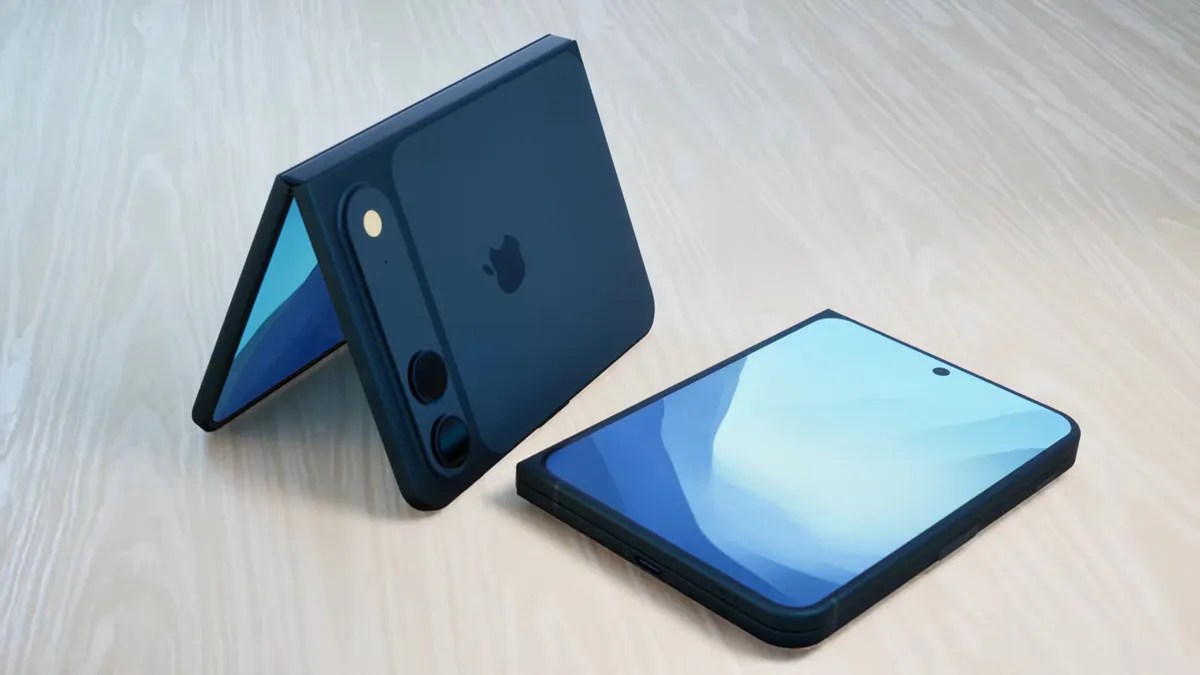
Performance and Hardware Expectations
While exact specs are still unknown, we can make educated predictions based on Apple’s current trajectory.
Likely Features:
- Next-gen Apple Silicon chip (A-series or M-series variant)
- Optimized battery efficiency
- Seamless integration with iOS ecosystem
Apple’s advantage isn’t just hardware—it’s the tight integration between hardware and software.
That’s something competitors still struggle to match.