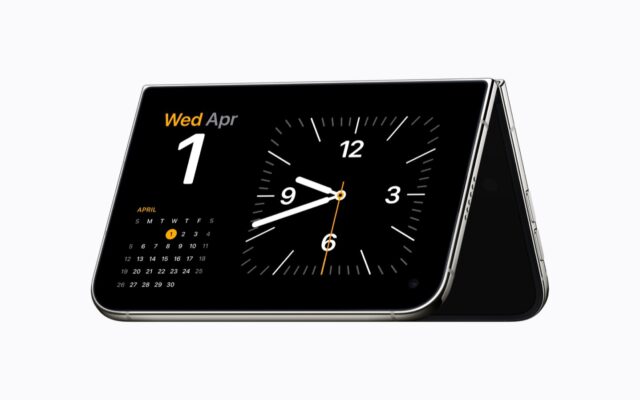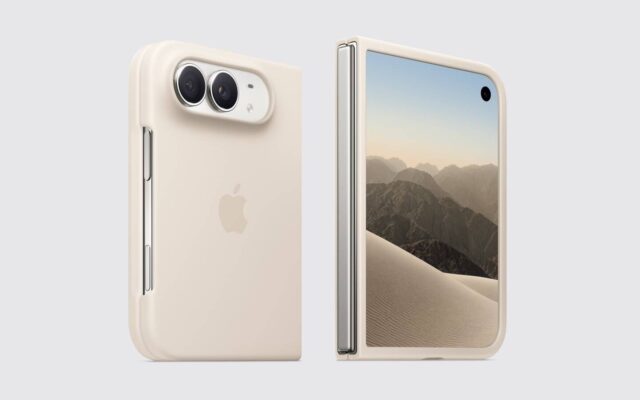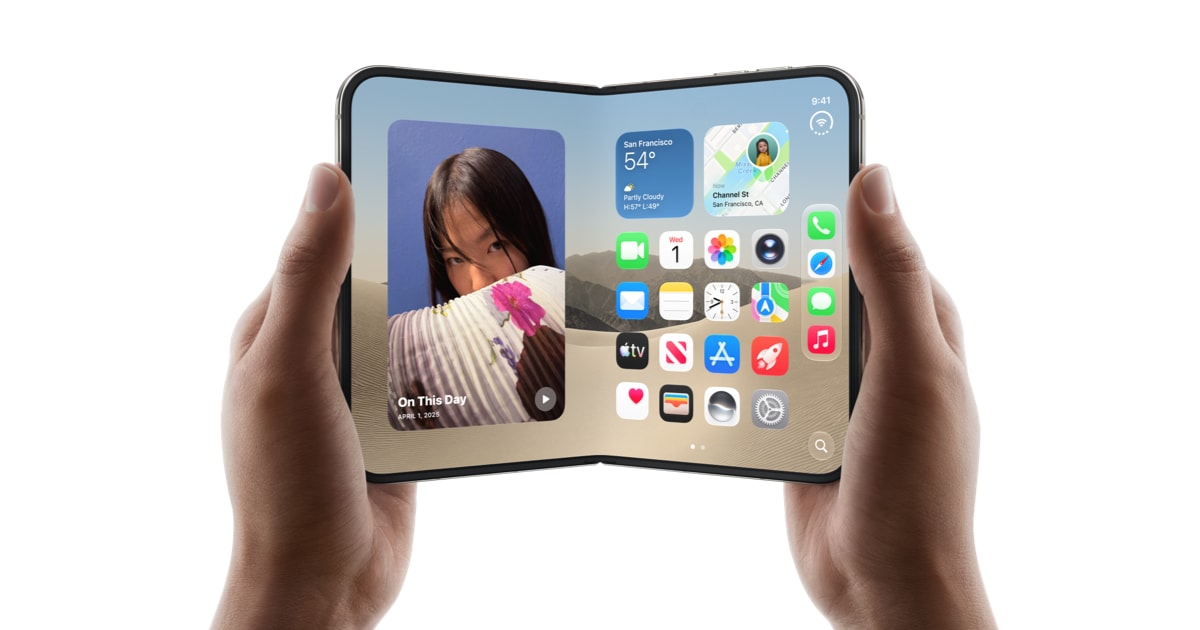
One of the biggest questions hanging over any foldable phone is simple: how will it look and feel after years of daily folding? Two separate stress tests of Apple’s iPhone Duo, run by two different reviewers, offer an early answer to that question. Together they paint a picture of a hinge that seems built to last, paired with a crease that becomes harder to ignore the more you fold it.
An iPhone Duo crease test pushes past 11,000 folds
YouTuber Tim Pan ran the most aggressive of the two tests. He checked the inner screen after 500 manual folds, then used a folding machine to add another 10,000 cycles, and finished with 1,000 more folds in freezing conditions around -4°F. Out of the box, the Duo’s crease appears as a faint line down the center of the inner display. After 500 folds, it was noticeably more visible, which Digital Trends estimates is roughly what a month or two of normal use would look like.
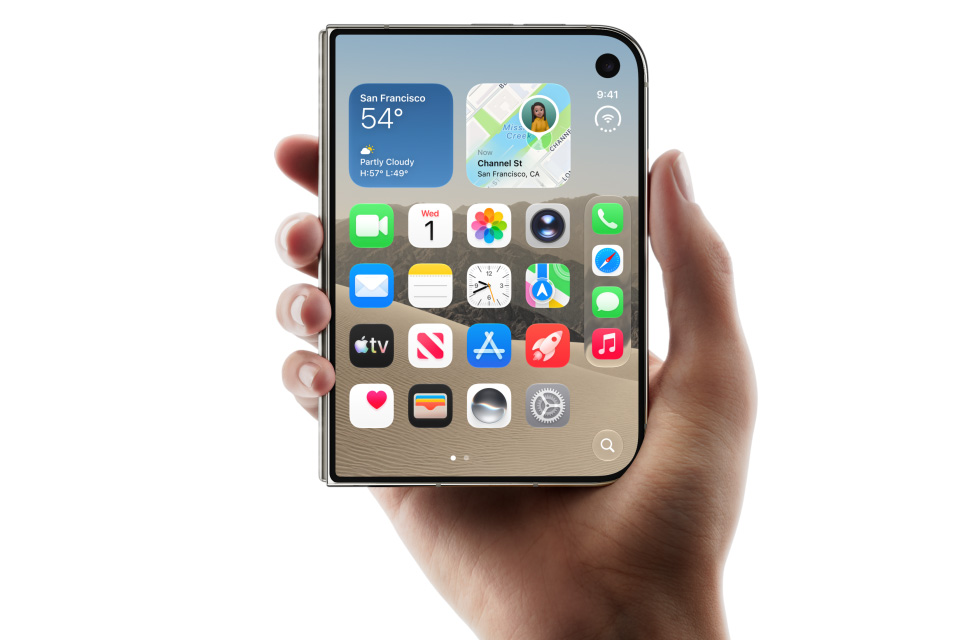
By the 10,000-fold mark, the crease had become significantly more pronounced. Notably, Apple’s matte coating on the inner screen, which is designed to diffuse light and soften the appearance of the fold line, was no longer enough to hide it. For context, folding a phone ten times a day gets you to 11,500 folds in about three years, while a heavier user who folds it 100 times a day would hit that number in under four months. In other words, how quickly your own Duo develops a visible crease depends almost entirely on how often you open and close it.
Did the hinge survive the abuse?
The crease wasn’t the only thing Pan was watching. He reported that the hinge itself still closed and opened with the same light resistance as it did on day one, even after thousands of cycles and a stint in sub-zero temperatures. The one wrinkle he found was that hair and sand can work their way into the hinge mechanism at certain fold angles, which is worth keeping in mind if you live somewhere dusty or sandy.
A second, even longer test on the hinge
Separately, reviewer Joanna Stern ran her own experiment, but focused specifically on hinge durability rather than the crease. She set up a robot to fold the Duo continuously for four nights while she slept, racking up more than 32,640 folds in total. Using a push-pull gauge, she found the hinge needed slightly more force to open after all those cycles. A stiffer hinge is generally seen as preferable to one that becomes loose or wobbly over time, and Stern says she couldn’t notice any difference in how the phone felt during normal daily use.
What this means if you’re considering a foldable iPhone
Neither test is an official Apple benchmark, and both were run under unusually extreme conditions that go well beyond typical daily handling. Still, the results line up with what foldable phone owners have generally experienced on other brands’ devices: hinges tend to hold up reasonably well, but a visible crease is largely a matter of time and usage frequency rather than a question of if it will appear at all. Expect the crease to become more visible over time rather than judging the phone purely on how it looks fresh out of the box.
The bottom line
Based on these two independent tests, the iPhone Duo’s hinge appears durable enough to handle years of realistic daily folding without falling apart or becoming loose. The crease, on the other hand, is not a question of whether it will show up, but when. If you fold your phone only a handful of times a day, you likely won’t notice a significant change for a couple of years. Heavy fidgeters who flip the phone open and shut constantly should expect the line to become visible much sooner.
Source: Digital Trends
Where to buy
As an Amazon Associate I earn from qualifying purchases.