Mini PCs used to mean one thing: a tiny, underpowered box for browsing and spreadsheets. That is no longer true in 2026. The category now stretches from $170 streaming boxes to $3,000 gaming machines with desktop-class RTX graphics, and Apple, Asus, HP and a wave of smaller Chinese brands are all shipping credible options. The question for most buyers isn’t whether mini PCs exist anymore — it’s whether one actually makes sense instead of a laptop or a full tower.
What’s new in 2026
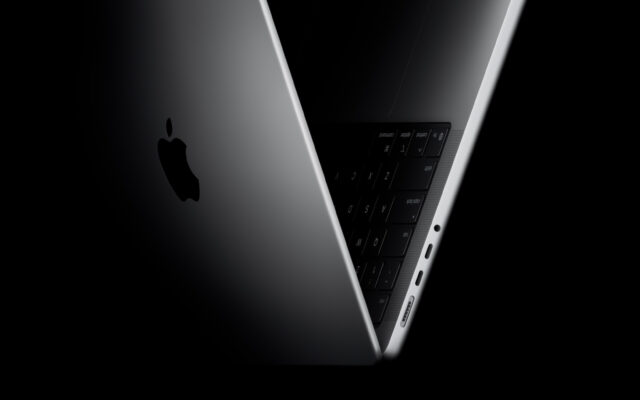
The biggest shift this year is how far performance has trickled down into small cases. Apple’s Mac mini, redesigned in October 2024 around the M4 and M4 Pro chips, set the tone: a 5 × 5 × 2-inch aluminum unibody with all USB-C ports, up to three 6K displays on the Pro model, and — notably — the first Thunderbolt 5 port on any Mac. An M5 version has been rumored for over a year, but as of this writing Apple has made no official announcement.
On the Windows side, Asus pushed in the opposite direction with the ROG NUC, a 3-liter vertical chassis packing an Intel Core Ultra 9 275HX and up to an RTX 5080 Laptop GPU at full 175W power. At $2,500 to $3,100, it’s effectively a gaming laptop’s internals without the laptop — a category that barely existed two years ago.
At the other end, GMKtec’s M6 Ultra and NucBox G5 keep proving that a genuinely usable PC can still cost under $700, or even under $200.
Key differences across price tiers
The mini PC market in 2026 breaks cleanly into four tiers, and understanding them matters more than chasing a single “best” model.
- Budget (under $250): Intel N150 or similar chips, 12–16GB RAM, fine for office work, streaming and browsing — not for gaming or heavy multitasking.
- Mid-range ($400–$700): AMD Ryzen 7/9 8000-series mobile chips with Radeon 780M graphics, handling 4K HDR video and light 1080p gaming on the same chip.
- Premium ($800–$1,500): Ryzen 9 8945HS or Intel Core Ultra 9 chips built for video editing and multitasking, including the Mac mini M4 Pro.
- Gaming-focused ($2,500+): Discrete Nvidia RTX 5000-series mobile GPUs, aimed at replacing a gaming tower outright.
Memory is also where Windows and Mac diverge sharply. Most Windows mini PCs still use upgradeable SO-DIMM DDR5 or M.2 storage, while the Mac mini’s unified memory is soldered and fixed at purchase. If RAM pricing is a factor in your decision, it’s worth reading up on why RAM shortages could stretch through 2028 and how that’s pushing up costs across the board — including inside these small-form-factor builds.
Connectivity has also standardized: Thunderbolt 4 or USB4 is now common even on mid-range units, and the Mac mini M4 Pro’s Thunderbolt 5 ports support up to 80Gb/s, double the M4’s 40Gb/s. Several premium models are also leaning into on-device AI acceleration and Copilot+ PC certification, a trend we’ve covered in more depth in our explainer on what an NPU actually does.
Mini PC spec comparison
| Model | Chip | RAM (typical) | Storage | Price |
|---|---|---|---|---|
| GMKtec NucBox G5 | Intel N150 | 12GB | 256GB SSD | ~$170 |
| GMKtec M6 Ultra | AMD Ryzen 5 7640HS | 16GB (expandable to 128GB) | 512GB–8TB | ~$500–$700 |
| Minisforum UM890 Pro | AMD Ryzen 9 8945HS | 32GB DDR5 | 1TB PCIe SSD | $900–$1,100 |
| Apple Mac mini (M4) | Apple M4 (10-core CPU) | 16GB unified | 256GB–2TB SSD | From $599 (launch price) |
| Apple Mac mini (M4 Pro) | Apple M4 Pro (12-core CPU) | 24GB unified (up to 64GB) | 256GB–2TB SSD | From $1,399 (launch price) |
| Asus ROG NUC (2025) | Intel Core Ultra 9 275HX | Up to 96GB DDR5 | Up to 2TB | $2,500–$3,100 |
Who should buy one — and who shouldn’t
A mini PC makes the most sense if you already know your workload. Office work, streaming and general browsing are handled comfortably by anything in the $170–$250 range, and there’s little reason to spend more. Creators editing 4K footage or juggling heavy multitasking should look at the $800–$1,500 Ryzen 9 or Mac mini M4 Pro tier, where 32GB of RAM is becoming the practical baseline rather than a luxury. Gamers chasing 1440p or higher should only consider the discrete-GPU tier near $2,500–$3,100 — integrated graphics like the Radeon 780M are genuinely capable at 1080p but won’t satisfy anyone used to a dedicated graphics card.
Mini PCs are a weaker choice if you need every port to be field-upgradeable over many years, since Mac mini memory is fixed at purchase and even Windows models have limited expansion slots compared to a full tower. They’re also not true desktop replacements for sustained, maximum-load workloads: thermal throttling and tighter power delivery in a small chassis typically mean it runs slower than an equivalent full-size system under heavy sustained use.
The bottom line
Mini PCs are absolutely worth buying in 2026 if your use case fits one of the clear tiers above — budget, mid-range, premium creator, or discrete-GPU gaming. The space and cost savings over a full tower are real, and performance at every price point is noticeably better than it was even two years ago. What you give up is long-term upgradeability and a small amount of sustained performance, so buyers who need maximum headroom for years of upgrades are still better served by a traditional desktop. For everyone else, the mini PC category has matured into a genuinely sensible option rather than a compromise.
Sources: the-gadgeteer.com, pcbuildadvisor.com, computingforgeeks.com, electronics.alibaba.com, lenovo.com, lowendmac.com
Where to buy
- Apple Mac mini (M4): check price on Amazon
- GMKtec M6 Ultra Mini PC: check price on Amazon
- Minisforum UM890 Pro Mini PC: check price on Amazon
- ASUS ROG NUC Gaming Mini PC: check price on Amazon
As an Amazon Associate I earn from qualifying purchases.