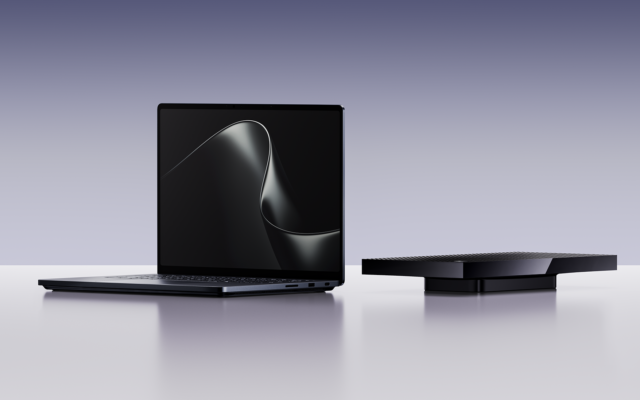
AMD tried to get ahead of the story. Days before Microsoft and Nvidia launched the first RTX Spark laptops on October 7, AMD released its own benchmark figures for Gorgon Halo, the chip family built to compete in this new category of AI-focused PCs. The timing was no accident: AMD wanted buyers comparing Gorgon Halo vs RTX Spark to see its numbers first, even though those numbers don’t include Nvidia’s chip at all. The Surface Laptop Ultra, the first RTX Spark laptop, starts at $2,599 and ships October 16, according to Tom’s Hardware.
What AMD actually compared
Rather than measuring against RTX Spark, which had not launched yet, AMD benchmarked its flagship Ryzen AI Max+ Pro 495 against Intel’s Core Ultra X9 388H, using ComfyUI to measure generative AI throughput across several models. AMD ran its top-spec 192GB configuration against a 64GB Panther Lake system, which AMD frames as a fair top-of-stack comparison even though the two platforms don’t typically compete for the same buyers.
The headline numbers show a performance advantage ranging from 1.1x up to a startling 32.2x, though that top figure looks like an outlier tied to a model that couldn’t be verified independently. It’s possible the gap reflects an optimization issue on Intel’s side, or simply that the workload was too large for the Panther Lake system to handle cleanly. Either way, treat the smaller, more consistent gains as the more realistic picture of what Gorgon Halo offers over Intel’s competing chips.
Token throughput tells a more honest story
AMD also shared raw token-generation numbers for two large language models. Running GLM 5.3 Flash, a mixture-of-experts model with 320 billion total parameters but only 18 billion active per token, the Ryzen AI Max+ Pro 495 hit a peak of 20 tokens per second using a mixed-quantization format. For context, Tom’s Hardware measured the previous-generation Ryzen AI Max+ 395 at 56 tokens per second on GPT-OSS 120B, and Nvidia’s DGX Spark (whose GB10 chip is nearly identical to RTX Spark) at 64 tokens per second on the same model. Those figures aren’t directly comparable, though: GPT-OSS 120B activates only about 5 billion parameters per token, against 18 billion for GLM 5.3 Flash.
On Qwen 3.8 Flash Next, a multimodal MoE model with roughly 125 billion main parameters and 5 billion active per token, AMD claims up to 42 tokens per second. Those are solid numbers on paper, but as Tom’s Hardware points out, throughput drops as context length grows, which is exactly what happens in real use once you’re feeding a model long documents or extended conversations rather than short test prompts. A model that starts at 20 tokens per second could become sluggish well before a long session is finished.
Memory capacity is the real selling point
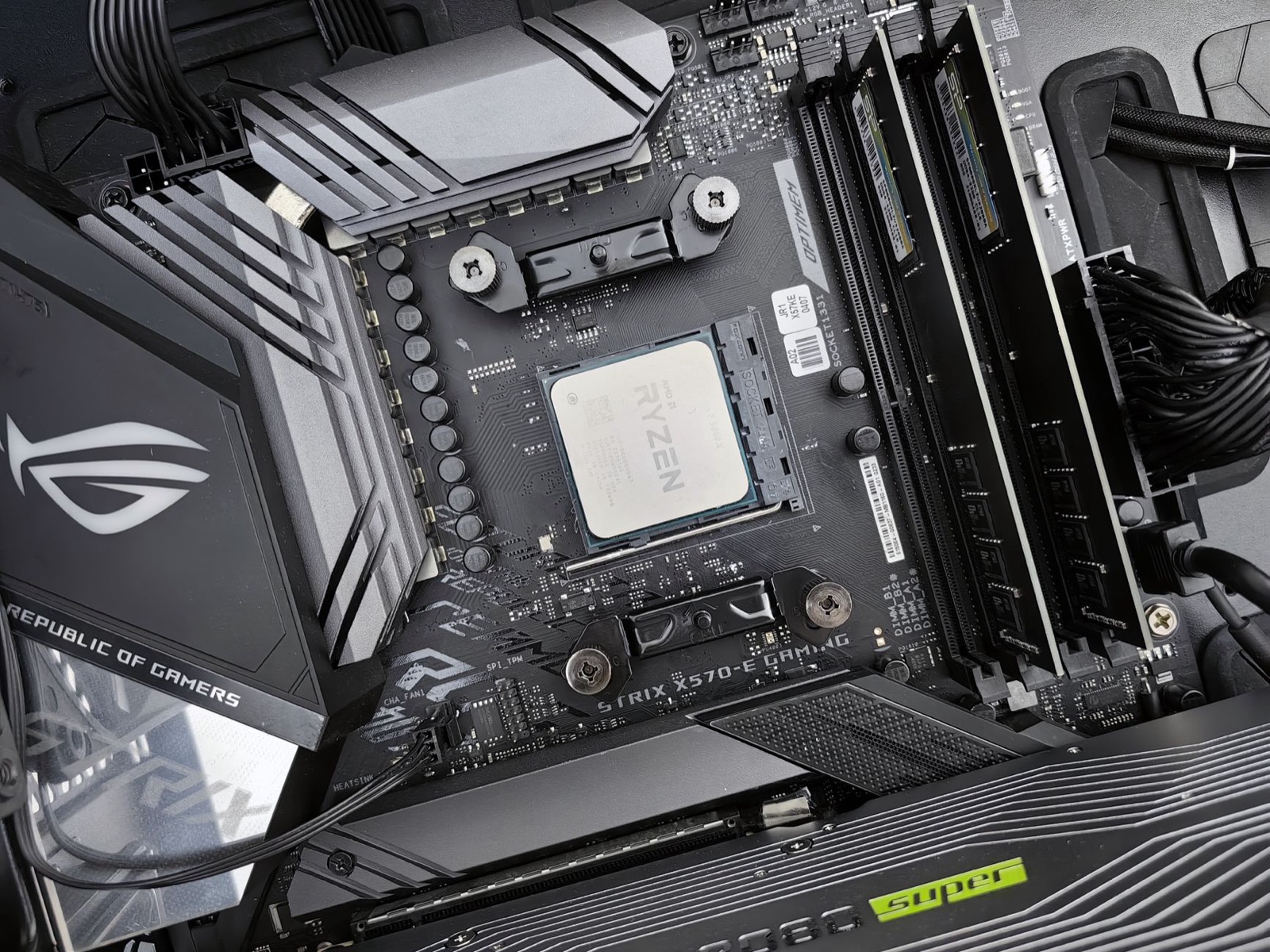
Gorgon Halo is largely a refresh of last year’s Strix Halo platform, using the same core counts and microarchitecture, with AMD’s flagship chip getting a 100 MHz clock bump and a jump from 128GB to 192GB of unified memory. That extra capacity is the main argument AMD is making against RTX Spark, which tops out at 128GB of unified memory just like the DGX Spark. More memory lets a machine load larger AI models locally, though Tom’s Hardware’s review of the Strix Halo-based Ryzen AI Halo found it trailing the DGX Spark in both time-to-first-token and tokens-per-second across three models, so bigger doesn’t automatically mean faster.
These chips are increasingly marketed as powering what AMD calls agentic PCs, machines built around running AI agents and large local models rather than just everyday productivity. That is a step up from the AI PC branding AMD and others have used for ordinary laptops (our NPU explainer covers how those chips handle AI tasks). During its press briefing, AMD initially touted shipping “10s of millions” of AI PCs before clarifying that figure down to “over half a million” agentic PCs specifically, numbers that presumably apply to Strix Halo and Gorgon Halo devices combined.
Where you can actually buy one
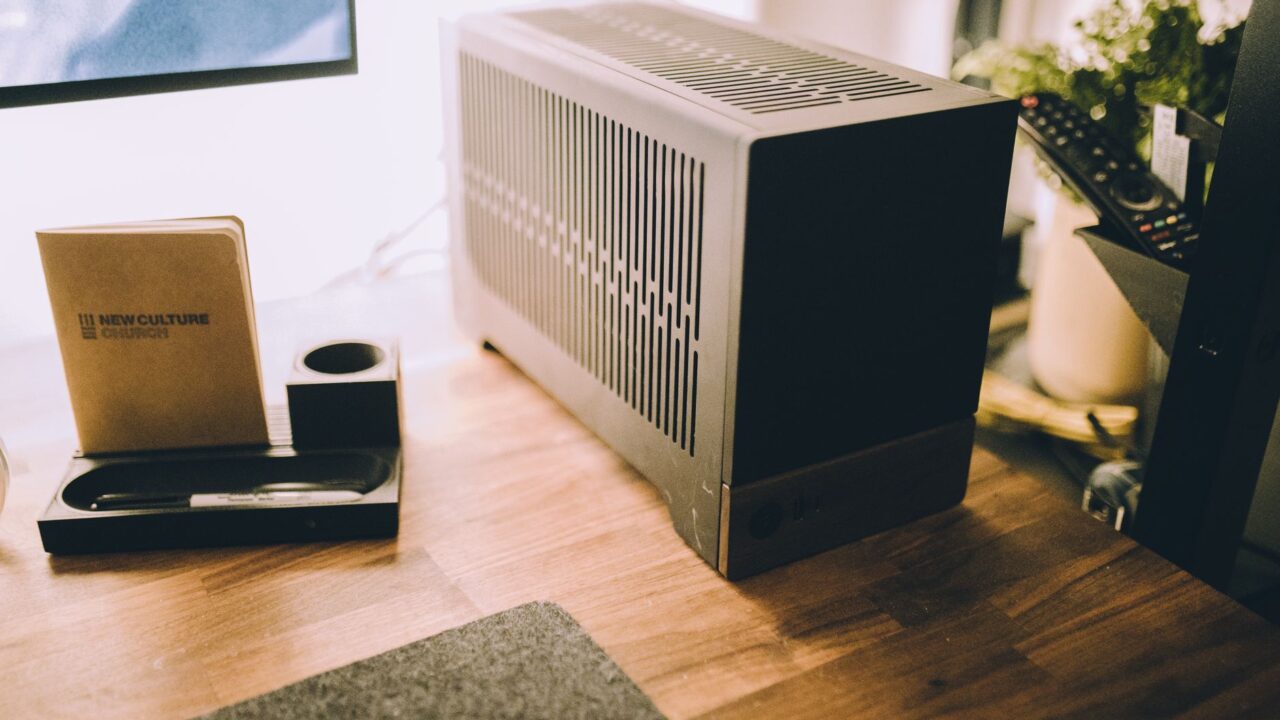
The first Gorgon Halo hardware is already on sale, including the Minisforum MS-S1 Max-P495, a mini PC built around the Ryzen AI Max+ Pro 495. Pricing for the top configuration sits around $7,000 right now, and Tom’s Hardware expects some systems to cost more than that as other vendors release their own, at a time when RAM is in short supply across the industry. For anyone weighing a purchase, it’s worth remembering that a Gorgon Halo mini PC occupies a very different price bracket and use case than a typical mini PC aimed at everyday computing, and it’s squarely aimed at people who want to run large AI models locally rather than general-purpose users.
The bottom line
AMD’s benchmarks were a preemptive strike rather than a direct comparison: they came out before RTX Spark launched and don’t include it. What’s clear is that Gorgon Halo’s main advantage over both Intel and Nvidia’s chip is memory capacity, not raw speed, and throughput tapers off as workloads get more demanding. If you’re considering one of these agentic PCs, the question isn’t which chip wins a slide deck, it’s whether running larger local models at modest speeds is worth the premium price these machines currently command. For most buyers, that answer is still no, at least until pricing settles and independent head-to-head testing arrives.
Source: Tom's Hardware
Where to buy
- Minisforum Mini PC: check price on Amazon
- AMD Ryzen AI Processor Laptop: check price on Amazon
- High-capacity RAM Kit: check price on Amazon
As an Amazon Associate I earn from qualifying purchases.